When your volumes outgrow printing, the hard part isn’t finding a moulder — it’s knowing whether the quote in front of you is a good one. We re-engineer your part for tooling, write the spec the shops quote against, and stay with you through first article approval.
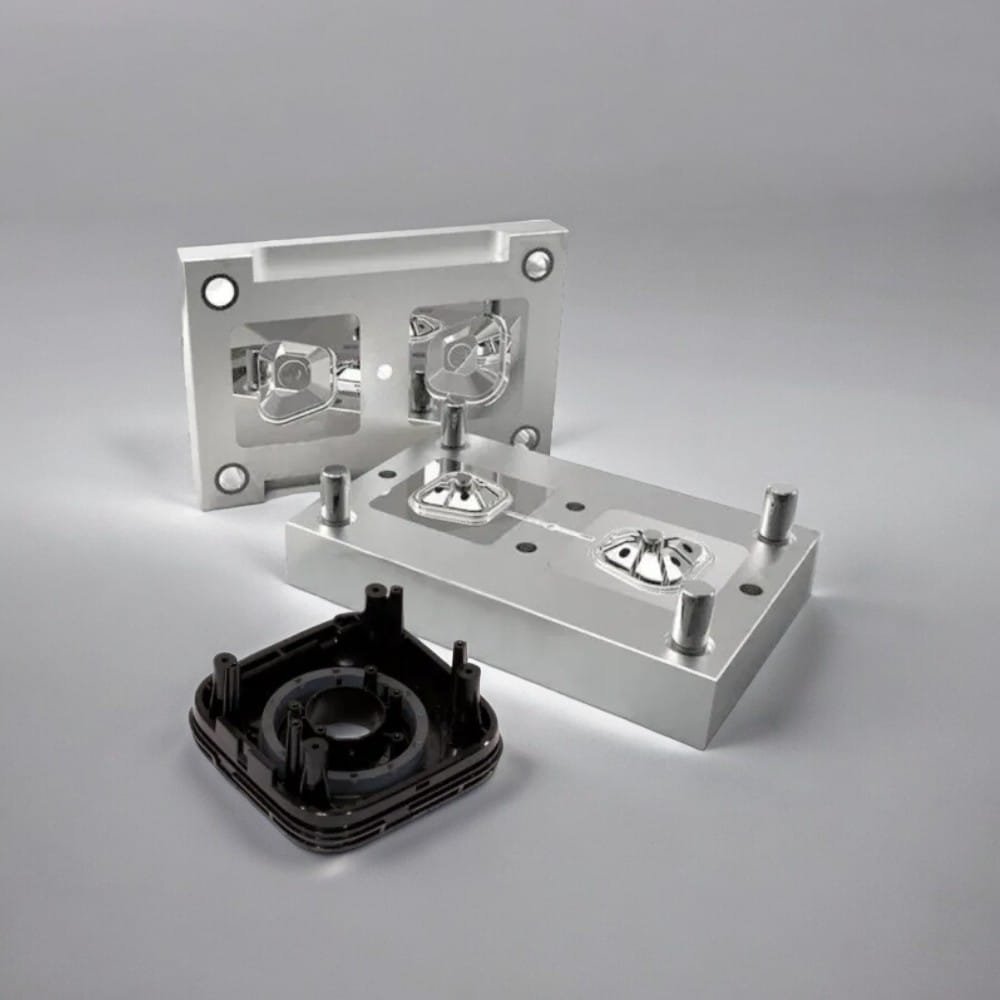
A part designed for printing is rarely a part that moulds well. Send that file to a moulder cold and one of three things happens: they quote a tool that fights the geometry, they quote conservatively to cover the unknowns, or they redesign it themselves without knowing why any of the features are there. You find out at first article, after the tool is cut.
Three shops, three assumptions, three different scopes. Without a written spec you’re comparing numbers that don’t describe the same tool — and the cheapest one is usually the one that excluded the most.
No draft, uneven walls, undercuts that force side actions, ribs that sink. Every one of those is cheap to fix in CAD and expensive to fix in steel.
Plenty of contracts leave the tool with the moulder. It only matters the day you want to move — and by then it matters a great deal. We make sure ownership is written down before you pay for it.
Draft, wall thickness, ribs, parting line, gate and ejector locations, shrink allowance — your part re-engineered to mould cleanly.
Cavity count, tool class and expected life, steel or aluminium, gating strategy, texture and tolerances, written down.
Matched to shops that suit your part and volume, all briefed from the same spec — so the quotes are actually comparable.
We read them with you: tool cost, piece price, lead time, what’s excluded, and who owns the tool at the end.
First-off parts checked against the original design intent, dimensionally and functionally, before you sign off on the tool.
Your part, re-engineered for tooling, with the changes documented so you know what moved and why.
The document the shops quote against. It stays useful long after this project — it’s how you re-quote in three years.
Same scope, same assumptions, side by side, with the exclusions pulled out where you can see them.
What was measured, what passed, what needed a tool adjustment before sign-off.
Confirmed before the tool is cut, not discovered afterwards.
We can keep printing your parts on bridge production while the tool is being built, so a launch doesn’t stall.
The crossover depends on part size, material, complexity and how stable the design is — but as a rough shape, injection moulding starts to beat printing somewhere in the thousands of parts, and a tool takes a few months to build before you see the first one. Below that, or while the design is still moving, bridge production is usually the better economics.
We’ll tell you when the answer is “not yet.” Committing to a tool around a design that’s still changing is the most expensive mistake in this whole process. If your volumes or your design aren’t ready, the honest advice is to keep printing — and we’d rather say so than sell you a transition you don’t need.
You pay us for the engineering work — the DFM, the tool spec, the quote review, the first article check. That fee is agreed up front and it doesn’t depend on which shop you choose.
Separately, some of the manufacturers we introduce clients to pay us a referral fee. It does not increase your price, and it does not decide our recommendation — we’ll tell you when we think the right answer is a shop that pays us nothing, or no tool at all. If a referral fee applies to your project, we’ll say so before you talk to them.
We’d rather put this on the website than have it come up later.
Book a call and bring your part and your annual volumes. We’ll tell you whether tooling makes sense yet — and if it doesn’t, we’ll say so.